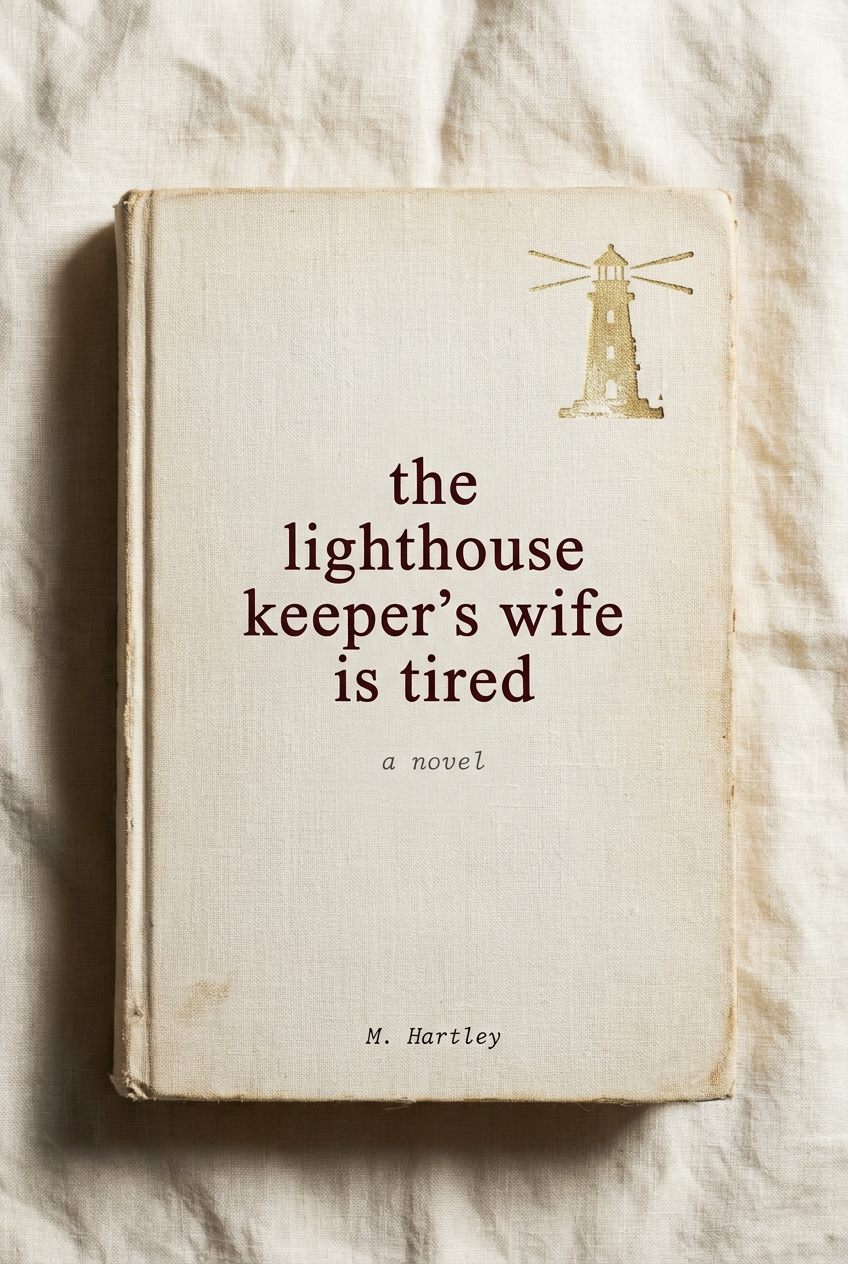
The opening, if you must.
She had not, she would later tell anyone who asked, set out to keep watch over a sea. The sea, in fact, had insisted. There was a house, and the house had a window, and the window faced what the council called, with the air of a man closing a meeting, the Atlantic.
Her husband had been the keeper, briefly, in the months before automation arrived in a small white van and replaced him with a sensor and a manual. He had taken the manual with him when he left, which she considered, on balance, the correct decision.
What remained, then, was the kettle. The kettle, the window, the sea. And Mairead, who had not signed up to any of it but who was, on a Tuesday in late November, the only person now charged with witnessing the weather.
She made the tea. She did not, on this occasion, drink it.
— what people, against my advice, have said
-
Helena Brydon The Times Literary SupplementCarson writes the kind of sentences you have to put the book down to forgive. There is no warmth, exactly. There is, however, weather.
-
Auralie Pemberton GrantaA novel that refuses, with great conviction, to be charming. I read it twice, against my will, and would do so again.
-
Padraig Doyle The Stinging FlyThere is, in Carson, a quiet refusal that the contemporary novel has, almost entirely, forgotten how to do. The lighthouse, here, is a moral object.